The problem
A healthcare facility is not simply a building.
It is a complex operating system. Yet in many projects, the facility is designed before the operating logic has been defined at all. What operating logic eventually exists is assembled informally after opening — department by department, workaround by workaround — producing years of fragmented post-opening work to repair workflows, strengthen governance, improve documentation, close accreditation gaps, enhance cybersecurity, and prepare the organization for AI.
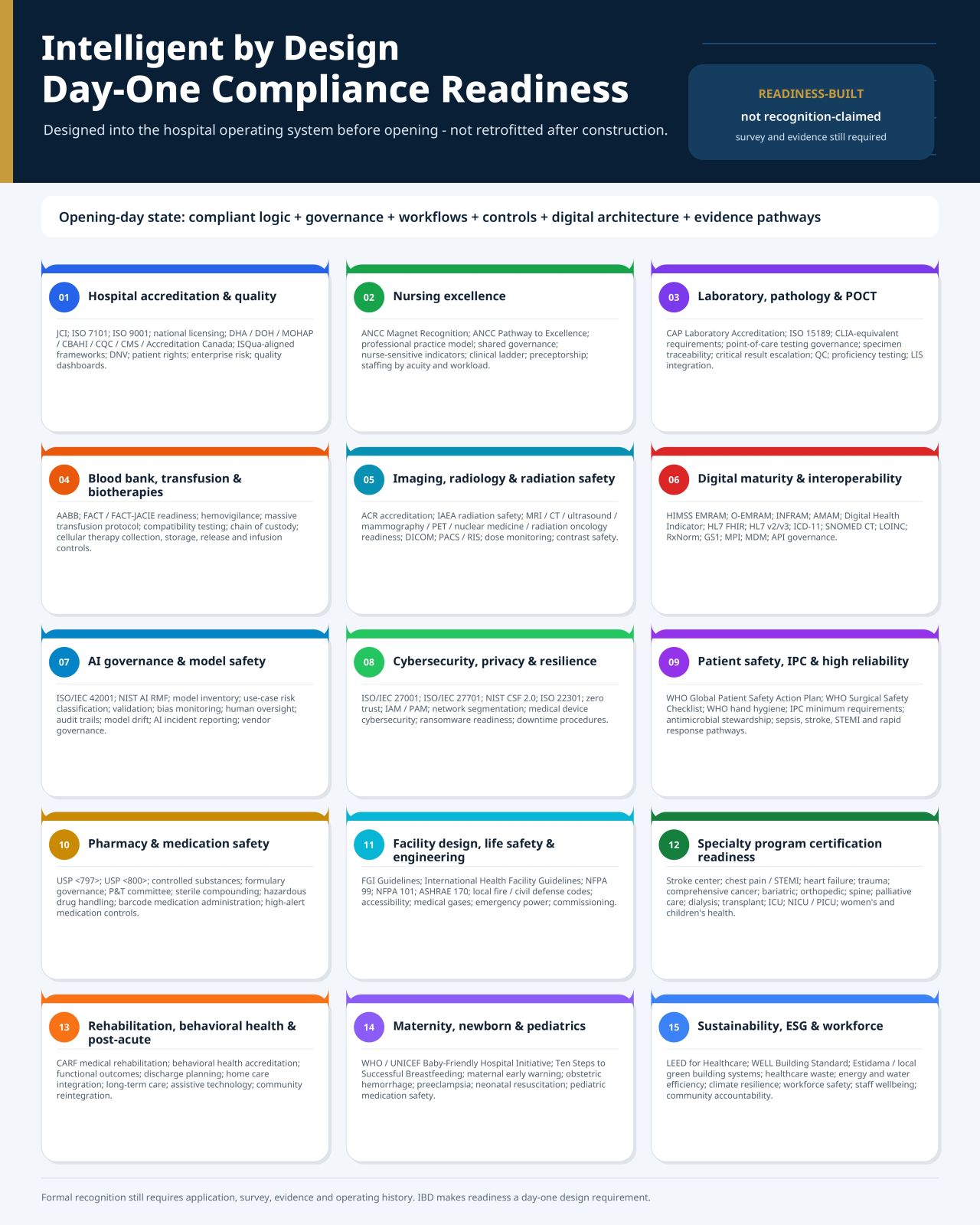
Accreditation, nursing excellence, laboratory discipline, digital maturity, cybersecurity, AI governance, patient safety, infection prevention, facility safety, and operational resilience should not be post-opening improvement programmes. They should be design requirements.
The IBD position
Define the operating system. Then the building follows.
That is the purpose of Intelligent by Design. IBD begins by defining the healthcare facility's operating system before designing the building. Clinical pathways, workflows, governance, staffing models, documentation, data architecture, quality controls, cyber controls, AI governance, logistics, escalation rules, and evidence pathways are designed first. The building is then designed to enable that operating system.
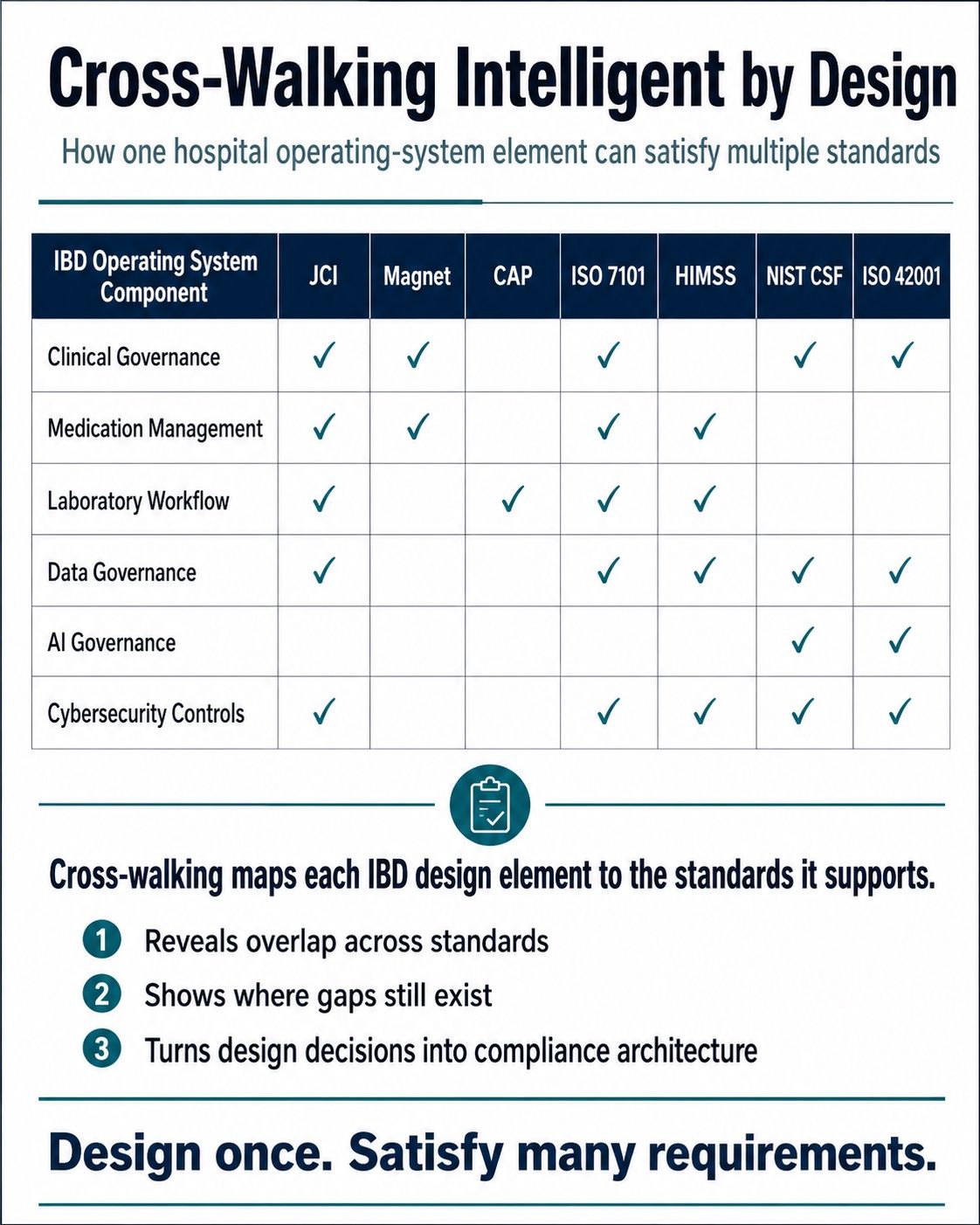
This approach does not automatically grant accreditation or certification. Formal recognition still requires surveys, evidence, inspections, and operational history. What it provides is a healthcare facility that opens readiness-built — aligned from day one with the operational logic expected by JCI, Magnet, CAP, HIMSS, ISO, NIST, WHO, FGI, NFPA, ACR, AABB, CARF, and national regulators.